Edo Castle
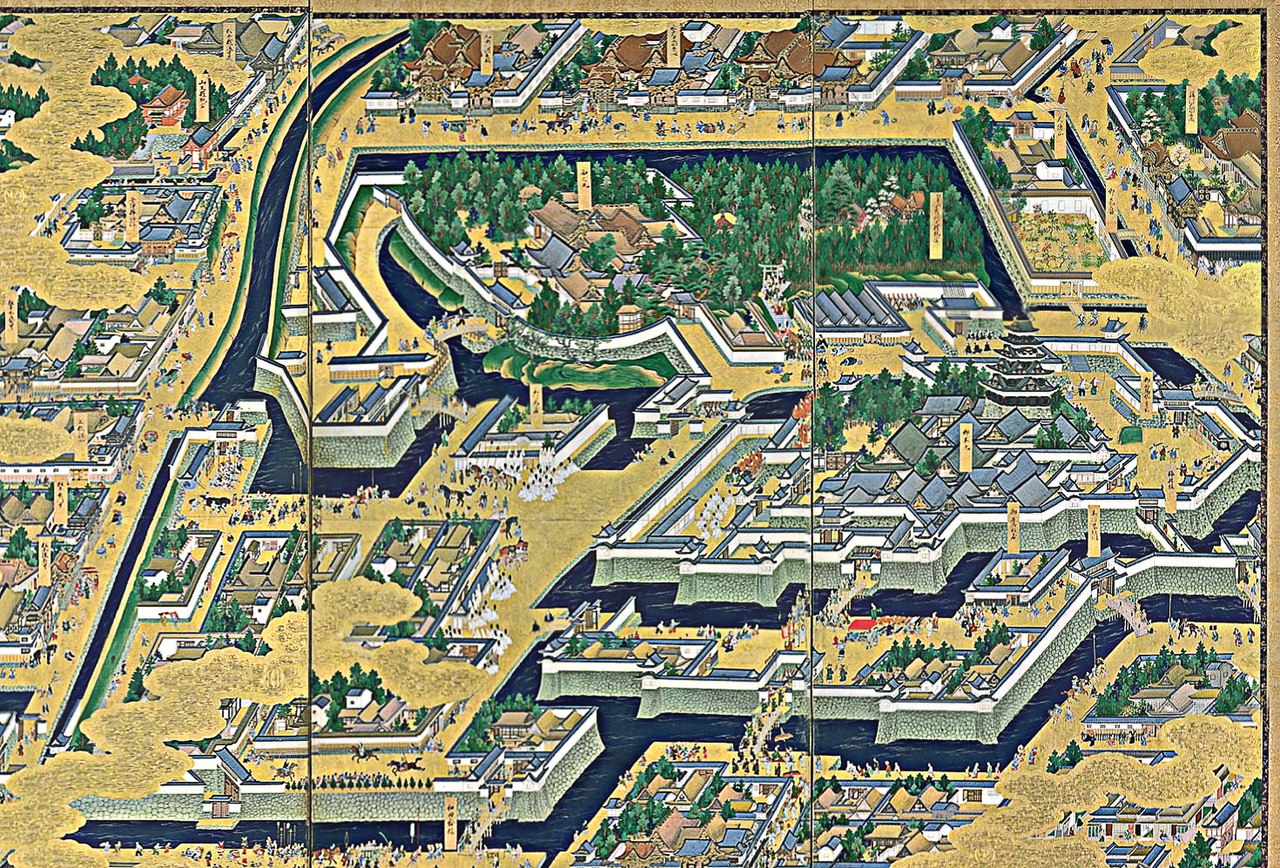
Built by Ota Dokan in 1457 and later expanded into the largest castle complex in the world by Tokugawa Ieyasu. The inner palace is now the Imperial Palace; the massive stone walls, moats, and gates remain as Japan's premier historic site.
| Japanese Name | 江戸城 |
|---|---|
| Prefecture | Tokyo (東京都) |
| Region | Kanto (関東) |
| Castle Type | Flatland Castle |
| Year Built | 1457 |
| Designation | 100名城 |
| Coordinates | 35.6852, 139.7528 |
Edo Castle represents one of the most significant landmarks in Japanese history and urban development. Originally built by Ota Dokan in 1457, the fortress was later expanded under Tokugawa Ieyasu into the largest castle complex in the world during the Edo period. Today the inner palace serves as the Imperial Palace, while the surrounding stone walls, moats, and gates remain among Japan's most recognizable historic structures.
The castle's rise to prominence began when Tokugawa Ieyasu selected it as his seat of power after consolidating control over Japan in the early 17th century. The shogun oversaw massive construction projects that transformed the relatively modest fortress into an administrative and military center of unprecedented scale, with fortifications that stretched across much of present-day central Tokyo.
The castle's defining features include its sophisticated system of nested moats, massive stone walls constructed from enormous granite blocks, and multiple gates designed to control and restrict access to the inner compounds. The layout reflects both defensive necessity and the display of power, with each successive ring of fortifications presenting greater obstacles to potential attackers. The remaining structures demonstrate the technical mastery of Edo-period construction methods.
Most of the original structures no longer stand, having been demolished or destroyed over the centuries, but substantial portions of the stone walls and moats remain visible today. The site attracts visitors from around the world who wish to understand the physical center of Tokugawa rule and the development of early modern Japan's political structures.
Edo Castle is recognized as one of Japan's top 100 castles as designated by the Japan Castle Foundation, a distinction that highlights its historical and architectural importance among the hundreds of castle sites across the country. As a flatland castle, its design reflects the defensive priorities and construction techniques of its era, with origins dating to 1457. Visitors traveling to Tokyo can explore the site alongside other regional historical attractions.
On the Ground
| Address | Imperial Palace, 1, Chiyoda, Tokyo, 100-0001, Japan |
|---|---|
| Car parking | 17 car parks within 1.5 km — nearest about 932 m away |
| Public toilets | 28 public toilets within 1.5 km — nearest about 366 m away |
Car parks and toilets are counted from OpenStreetMap within 1.5 km of the castle coordinates, as recorded on 2026-08-15. They are not necessarily run by the castle, and OpenStreetMap does not record every facility — “none recorded” does not mean there are none.
Hours & Admission
| Admission | Free |
|---|---|
| Opening hours | 09:00 – 18:00 |
| Closed | Mondays and Fridays; 28 December – 3 January. Public holidays other than the Emperor’s Birthday are open; when a Monday is a holiday and the garden opens, it closes the following Tuesday instead |
| Notes | The Imperial Palace East Gardens (the former Honmaru, Ninomaru and keep base of Edo Castle) are free to enter. Hours change with the season: 9:00–17:00 (1 Mar–14 Apr, September), 9:00–18:00 (15 Apr–end Aug), 9:00–16:30 (October), 9:00–16:00 (1 Nov–end Feb) |
Source: official site, checked 2026-08-22. Fees and hours change without notice — please confirm before travelling.
Is It Original?
| Original keep still standing? | No — this castle is not among the twelve in Japan whose keep survives from the pre-modern period. Any tower here is a later reconstruction or the site is a ruin. |
|---|---|
| Classification on this site | Historic Ruins |
| Nationally designated properties recorded here | 2 |
| Recorded property names (Japanese) | 江戸城造営関係資料(甲良家伝来) / 江戸城跡 |
The count of twelve surviving keeps is stated independently by the official sites of Matsue, Maruoka, Matsuyama and Bitchu Matsuyama (checked 2026-09-04). Each of the twelve carries its own source on its own page. The classification line below it is this site's own grouping, not an official designation. The designated properties below it come from the Agency for Cultural Affairs national database of designated cultural properties (国指定文化財等データベース), retrieved 2026-08-13. Official record. A missing line means no entry was found in that database — not that the property is undesignated.
Getting There
| Nearest station | Takebashi Station (竹橋駅) — 0.7 km in a straight line |
|---|---|
| Largest station nearby | Tōkyō Station — 1.1 km in a straight line |
| Daily passengers at that station (2019) | 934,330 |
Station distances are straight-line, measured from the castle coordinates. Passenger counts: National Land Numerical Information (MLIT), FY2019.
Location
View larger map — © OpenStreetMap contributors
Sources and What a Blank Means
Data on this page comes from OpenStreetMap, Wikimedia Commons, the Agency for Cultural Affairs national database of designated cultural properties, the National Land Numerical Information service (MLIT) and the castle's official site. Checked 2026-08-22.
A blank or missing line means we found no record in those sources — not that the castle lacks the thing. Admission fees, opening hours and access change without notice; please confirm with the official site before travelling.