Kagoshima Castle
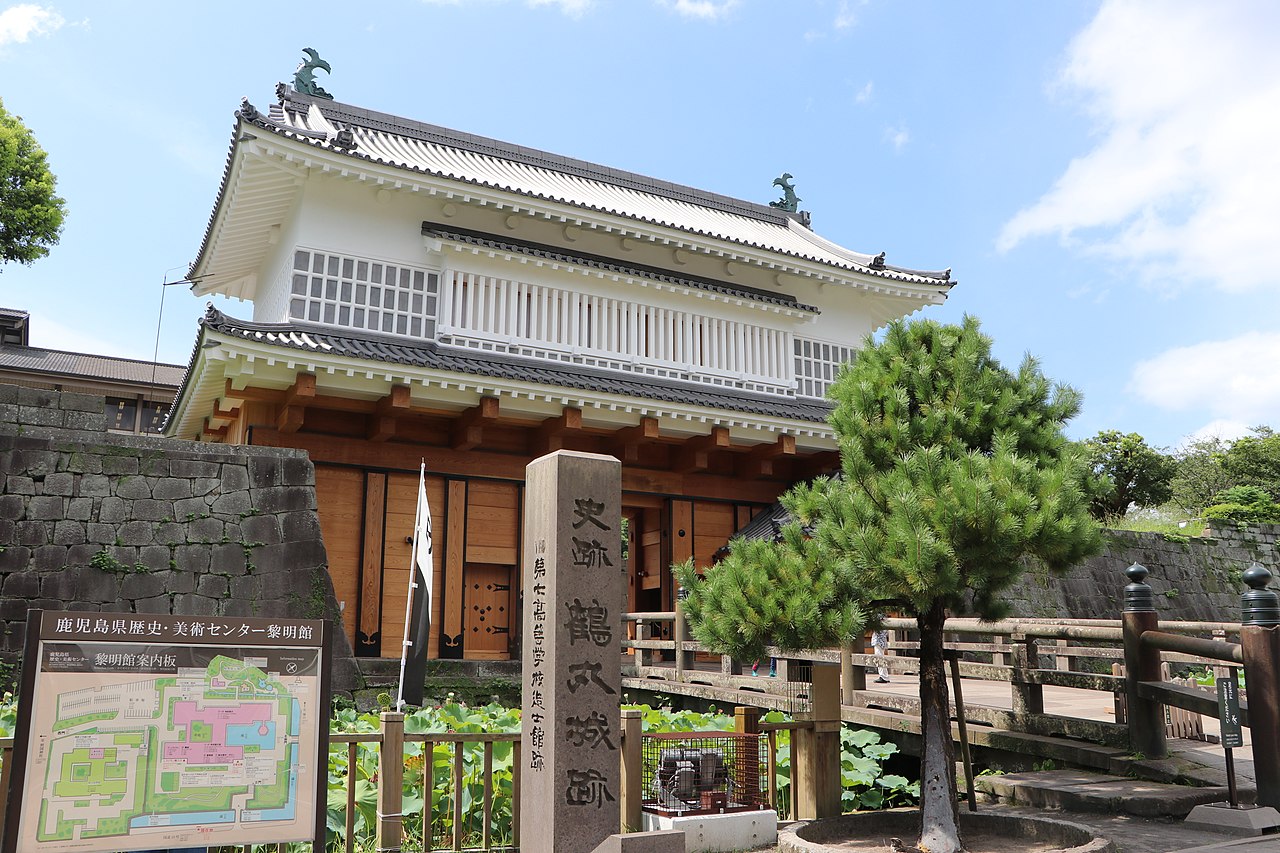
Headquarters of the mighty Shimazu clan, rulers of Satsuma domain and Japan's southernmost major feudal domain. Unusually, this 'castle without a keep' (no tenshu was ever built) relied on the active volcano Sakurajima behind it as natural defense. The reconstructed Goten Museum is Kyushu's finest castle museum.
| Japanese Name | 鹿児島城 |
|---|---|
| Prefecture | Kagoshima Prefecture (鹿児島県) |
| Region | Kyushu (九州) |
| Castle Type | Flatland Castle |
| Year Built | 1601 |
| Designation | 100名城 |
| Coordinates | 31.5906, 130.5553 |
Kagoshima Castle served as the headquarters of the Shimazu clan, one of Japan's most powerful feudal families who ruled the vast Satsuma domain from this strategic lowland location. As one of Japan's 100 Famous Castles, it represents a crucial center of political power that shaped the broader course of Japanese history, particularly during the crucial transition from feudalism to modern nationhood.
Established in 1601, the castle commanded the southernmost major feudal domain in Japan and served as the administrative and military nerve center for Shimazu authority. The domain's significant resources and military capabilities made the Shimazu family influential participants in national political developments throughout the Edo period and beyond.
What makes this castle architecturally distinctive is the absence of a traditional tenshu, or main keep tower, which was considered a necessary symbol of feudal authority in most major castles. Instead, the Shimazu clan relied on natural defenses, particularly the active volcano Sakurajima looming behind the castle, to project power and discourage challenge. This unconventional approach suggests confidence born from genuine military strength and regional dominance.
The Goten Museum, reconstructed on the site, stands as Kyushu's finest castle museum and houses valuable artifacts and displays explaining the Shimazu clan's history and the castle's significance. Visitors can examine how this unusual castle design functioned within feudal political hierarchies and appreciate the region's distinctive architectural and strategic traditions.
Kagoshima Castle is recognized as one of Japan's top 100 castles as designated by the Japan Castle Foundation, a distinction that highlights its historical and architectural importance among the hundreds of castle sites across the country. As a flatland castle, its design reflects the defensive priorities and construction techniques of its era, with origins dating to 1601. Visitors traveling to Kagoshima Prefecture can explore the site alongside other regional historical attractions.
On the Ground
| Address | Sennichi-cho, Chuo, Kagoshima, Kagoshima Prefecture, 892-8677, Japan |
|---|---|
| Car parking | 50 car parks within 1.5 km — nearest about 290 m away |
| Public toilets | 9 public toilets within 1.5 km — nearest about 773 m away |
Car parks and toilets are counted from OpenStreetMap within 1.5 km of the castle coordinates, as recorded on 2026-08-15. They are not necessarily run by the castle, and OpenStreetMap does not record every facility — “none recorded” does not mean there are none.
Castle Hopping from Here
| Castle | Distance |
|---|---|
| Chiran Castle 知覧城 | 26.3 km |
Distances are straight-line between castle coordinates, not travel distance. Only castles within 30 km are listed.
Is It Original?
| Original keep still standing? | No — this castle is not among the twelve in Japan whose keep survives from the pre-modern period. Any tower here is a later reconstruction or the site is a ruin. |
|---|---|
| Classification on this site | Historic Ruins |
| Nationally designated properties recorded here | 1 |
| Recorded property names (Japanese) | 鹿児島城跡 |
The count of twelve surviving keeps is stated independently by the official sites of Matsue, Maruoka, Matsuyama and Bitchu Matsuyama (checked 2026-09-04). Each of the twelve carries its own source on its own page. The classification line below it is this site's own grouping, not an official designation. The designated properties below it come from the Agency for Cultural Affairs national database of designated cultural properties (国指定文化財等データベース), retrieved 2026-08-13. Official record. A missing line means no entry was found in that database — not that the property is undesignated.
Getting There
| Nearest station | Tenmonkandori #1- 07, #2-07 Station (天文館通駅) — 0.1 km in a straight line |
|---|---|
| Largest station nearby | Kagoshima-Chūō Station — 1.4 km in a straight line |
| Daily passengers at that station (2019) | 40,542 |
Station distances are straight-line, measured from the castle coordinates. Passenger counts: National Land Numerical Information (MLIT), FY2019.
Location
View larger map — © OpenStreetMap contributors
Sources and What a Blank Means
Data on this page comes from OpenStreetMap, Wikimedia Commons, the Agency for Cultural Affairs national database of designated cultural properties and the National Land Numerical Information service (MLIT). Checked 2026-08-22.
A blank or missing line means we found no record in those sources — not that the castle lacks the thing. Admission fees, opening hours and access change without notice; please confirm with the official site before travelling.