Kumamoto Castle
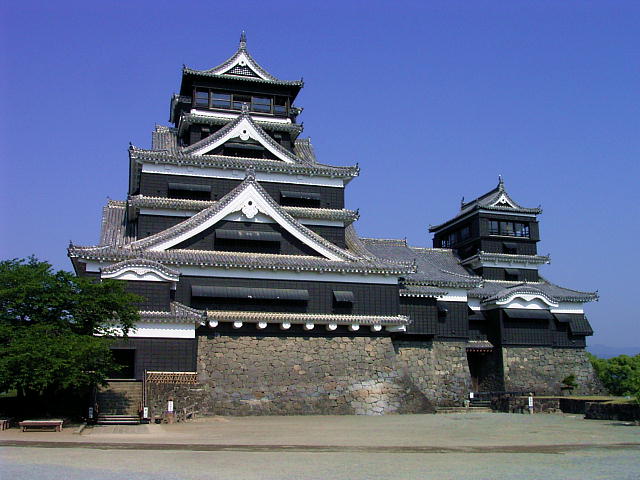
Japan's most formidable castle, built by Kato Kiyomasa in 1601 with genius defensive engineering — sloped stone walls impossible to climb, wells dug throughout, and edible wallpaper (yam-paste plaster). Damaged in the 2016 earthquake, its ongoing restoration is Japan's most ambitious castle repair project.
| Japanese Name | 熊本城 |
|---|---|
| Prefecture | Kumamoto Prefecture (熊本県) |
| Region | Kyushu (九州) |
| Castle Type | Hill Castle |
| Year Built | 1601 |
| Designation | 100名城 |
| Coordinates | 32.8065, 130.7058 |
Kumamoto Castle stands as one of Japan's most formidable feudal fortresses, built by the legendary military commander Kato Kiyomasa in 1601. Its reputation as an nearly impregnable stronghold rests on innovations in defensive architecture that were revolutionary for the time. The castle's engineering represented the pinnacle of Edo-period military design and has earned it recognition as one of Japan's most important historical structures.
Kiyomasa's genius lay in his approach to castle design, which prioritized practical defense over conventional aesthetics. The sloped stone walls, known as mukuri-ishi, curve outward in such a way that climbing them becomes virtually impossible, a principle that would influence castle construction throughout Japan. Additionally, the fortress contained numerous wells throughout its grounds, ensuring the garrison could withstand lengthy sieges. One particularly ingenious feature was the use of edible wallpaper made from yam paste, which could sustain defenders during prolonged attacks.
The 2016 Kumamoto earthquakes caused significant structural damage to this historic monument, yet the disaster also led to one of Japan's most comprehensive castle restoration projects. The ongoing reconstruction effort involves meticulous documentation and careful restoration of the damaged sections, drawing on historical records and archaeological evidence. Engineers and historians have worked together to preserve the castle's authenticity while incorporating modern safety standards.
The castle remains accessible to visitors during restoration phases, allowing them to witness the careful work of preservation specialists. The site offers educational exhibits explaining both the original construction techniques and the modern restoration efforts. Few castles offer such a clear window into the dedication required to maintain Japan's architectural heritage for future generations.
Kumamoto Castle is recognized as one of Japan's top 100 castles as designated by the Japan Castle Foundation, a distinction that highlights its historical and architectural importance among the hundreds of castle sites across the country. Its design reflects the defensive priorities and construction techniques of the feudal period, with origins dating to 1601. Visitors traveling to Kumamoto Prefecture can explore the site alongside other regional historical attractions.
On the Ground
| Address | Yomogi Kumamoto Road, Honmaru, Chuo Ward, Kumamoto, Kumamoto Prefecture, 860-0001, Japan |
|---|---|
| Car parking | 44 car parks within 1.5 km — nearest about 228 m away |
| Public toilets | 13 public toilets within 1.5 km — nearest about 238 m away |
Car parks and toilets are counted from OpenStreetMap within 1.5 km of the castle coordinates, as recorded on 2026-08-15. They are not necessarily run by the castle, and OpenStreetMap does not record every facility — “none recorded” does not mean there are none.
Castle Hopping from Here
| Castle | Distance |
|---|---|
| Uto Castle 宇土城 | 14.7 km |
Distances are straight-line between castle coordinates, not travel distance. Only castles within 30 km are listed.
Is It Original?
| Original keep still standing? | No — this castle is not among the twelve in Japan whose keep survives from the pre-modern period. Any tower here is a later reconstruction or the site is a ruin. |
|---|---|
| Classification on this site | Reconstructed Castle |
| Nationally designated properties recorded here | 1 |
| Recorded property names (Japanese) | 熊本城跡 |
The count of twelve surviving keeps is stated independently by the official sites of Matsue, Maruoka, Matsuyama and Bitchu Matsuyama (checked 2026-09-04). Each of the twelve carries its own source on its own page. The classification line below it is this site's own grouping, not an official designation. The designated properties below it come from the Agency for Cultural Affairs national database of designated cultural properties (国指定文化財等データベース), retrieved 2026-08-13. Official record. A missing line means no entry was found in that database — not that the property is undesignated.
Getting There
| Nearest station | Kumamoto Castle / City Hall Station (熊本城・市役所前駅) — 0.4 km in a straight line |
|---|---|
| Largest station nearby | Kumamoto Station Station — 2.4 km in a straight line |
| Daily passengers at that station (2019) | 30,880 |
Station distances are straight-line, measured from the castle coordinates. Passenger counts: National Land Numerical Information (MLIT), FY2019.
Location
View larger map — © OpenStreetMap contributors
Sources and What a Blank Means
Data on this page comes from OpenStreetMap, Wikimedia Commons, the Agency for Cultural Affairs national database of designated cultural properties and the National Land Numerical Information service (MLIT). Checked 2026-08-22.
A blank or missing line means we found no record in those sources — not that the castle lacks the thing. Admission fees, opening hours and access change without notice; please confirm with the official site before travelling.