Kunohe Castle
Stronghold of the Kunohe clan in northern Iwate, site of the 1591 Kunohe Rebellion against Toyotomi Hideyoshi. Its well-preserved earthworks and stone foundations are a national historic site.
| Japanese Name | 九戸城 |
|---|---|
| Prefecture | Iwate Prefecture (岩手県) |
| Region | Tohoku (東北) |
| Castle Type | Flatland Castle |
| Year Built | 16th c. |
| Designation | 続100名城 |
| Coordinates | 40.2167, 141.3 |
Kunohe Castle stands as a significant historical site in northern Iwate Prefecture, representing a pivotal moment in Japan's unification period. The fortress served as the stronghold of the Kunohe clan and is most remembered as the site of the 1591 Kunohe Rebellion, a major uprising against the authority of Toyotomi Hideyoshi during his consolidation of power across the nation. This rebellion marked one of the final challenges to Hideyoshi's dominance in the eastern territories.
The castle was constructed in the 16th century as a flatland fortress, strategically positioned to control the surrounding region. Following the 1591 rebellion, which ultimately resulted in the clan's defeat, the site fell under the control of the Tokugawa shogunate. The outcome of this conflict was significant in establishing central authority over the previously semi-independent northern domains.
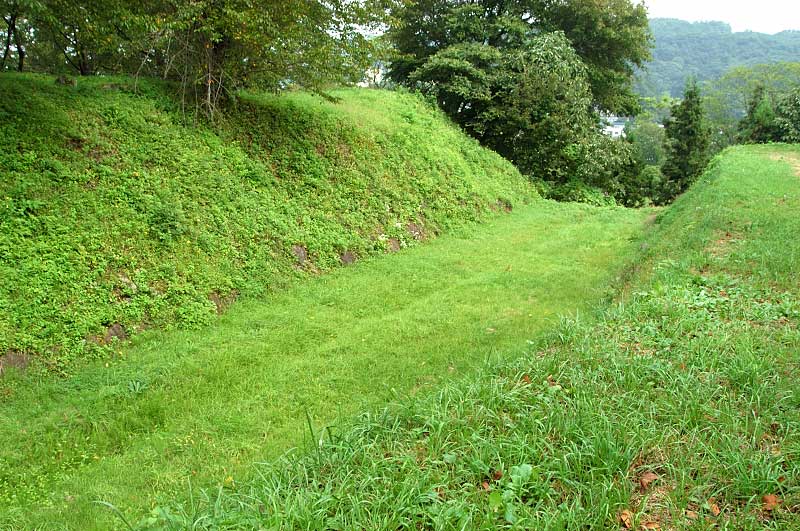
What distinguishes Kunohe Castle today is the exceptional preservation of its earthwork fortifications and stone foundations. The site contains well-maintained defensive structures including multiple baileys, moats, and embankments that reflect the sophisticated military engineering of the period. These archaeological features provide valuable insight into late-16th-century castle design and construction methods in the Tohoku region.
Designated as a national historic site, the ruins offer visitors a tangible connection to a transformative period in Japanese history. The earthworks and stone remains are accessible to the public, allowing visitors to observe the scale and complexity of the fortification system that once protected the clan's power base. For those interested in the final stages of the Sengoku period and the Toyotomi unification, this castle presents an important historical landmark with well-preserved physical evidence of its former significance.
Kunohe Castle is recognized as one of Japan's second 100 castles as designated by the Japan Castle Foundation, a distinction that highlights its historical and architectural importance among the hundreds of castle sites across the country. As a flatland castle, its design reflects the defensive priorities and construction techniques of its era, with origins dating to 16th c. Visitors traveling to Iwate Prefecture can explore the site alongside other regional historical attractions.
On the Ground
| Address | Kozenji, Ichinohe, Ninohe County, Iwate Prefecture, 028-5311, Japan |
|---|---|
| Car parking | 40 car parks within 1.5 km — nearest about 70 m away |
| Public toilets | None recorded within 1.5 km |
Car parks and toilets are counted from OpenStreetMap within 1.5 km of the castle coordinates, as recorded on 2026-08-15. They are not necessarily run by the castle, and OpenStreetMap does not record every facility — “none recorded” does not mean there are none.
Castle Hopping from Here
| Castle | Distance |
|---|---|
| Sannohe Castle 三戸城 | 16.9 km |
Distances are straight-line between castle coordinates, not travel distance. Only castles within 30 km are listed.
Is It Original?
| Original keep still standing? | No — this castle is not among the twelve in Japan whose keep survives from the pre-modern period. Any tower here is a later reconstruction or the site is a ruin. |
|---|---|
| Classification on this site | Historic Ruins |
| Nationally designated properties recorded here | 1 |
| Recorded property names (Japanese) | 九戸城跡 |
The count of twelve surviving keeps is stated independently by the official sites of Matsue, Maruoka, Matsuyama and Bitchu Matsuyama (checked 2026-09-04). Each of the twelve carries its own source on its own page. The classification line below it is this site's own grouping, not an official designation. The designated properties below it come from the Agency for Cultural Affairs national database of designated cultural properties (国指定文化財等データベース), retrieved 2026-08-13. Official record. A missing line means no entry was found in that database — not that the property is undesignated.
Getting There
| Nearest station | Ichinohe Station (一戸駅) — 0.7 km in a straight line |
|---|---|
| Daily passengers at that station (2019) | 543 |
Station distances are straight-line, measured from the castle coordinates. Passenger counts: National Land Numerical Information (MLIT), FY2019.
Location
View larger map — © OpenStreetMap contributors
Sources and What a Blank Means
Data on this page comes from OpenStreetMap, Wikimedia Commons, the Agency for Cultural Affairs national database of designated cultural properties and the National Land Numerical Information service (MLIT). Checked 2026-08-22.
A blank or missing line means we found no record in those sources — not that the castle lacks the thing. Admission fees, opening hours and access change without notice; please confirm with the official site before travelling.