Mito Castle
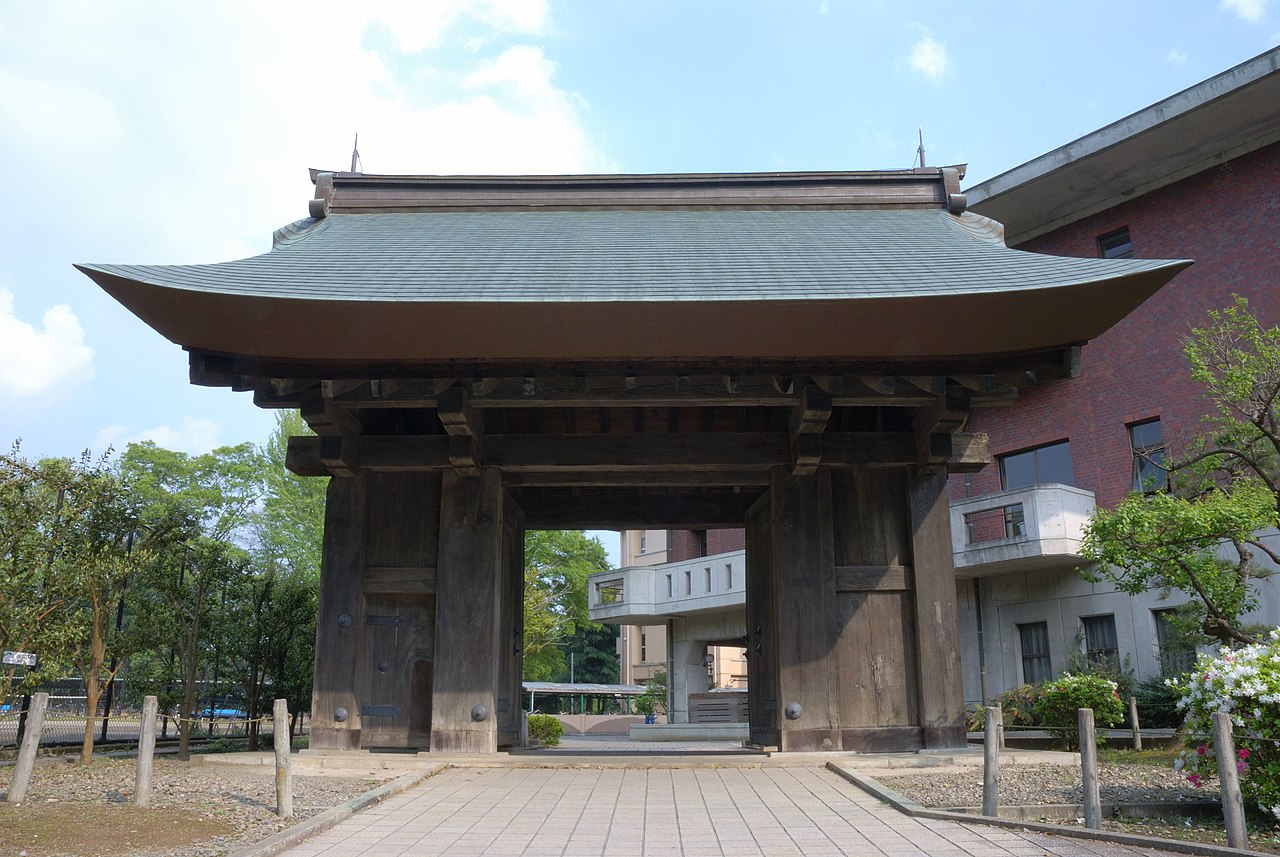
Seat of the Mito Tokugawa domain, one of the three main Tokugawa branch families. The castle occupied a narrow ridge between two rivers. A large three-story gate (Ninomaru Otemon) has been reconstructed.
| Japanese Name | 水戸城 |
|---|---|
| Prefecture | Ibaraki Prefecture (茨城県) |
| Region | Kanto (関東) |
| Castle Type | Hill Castle |
| Year Built | 15th c. |
| Designation | 100名城 |
| Coordinates | 36.3667, 140.4833 |
Mito Castle served as the seat of the Mito Tokugawa domain, one of the three principal branch families of the Tokugawa clan who ruled Japan. Established in the fifteenth century and developed into a major fortress during the Edo period, this hill castle occupied a strategically defensive position on a narrow ridge situated between two rivers that provided natural protection.
The Mito domain held considerable prestige and power within the Tokugawa system, producing the Mito School of Confucian scholarship and playing an important role in late Edo politics. The castle served not only as a military stronghold but also as an administrative center for the domain's extensive territories. Its location along the Kumozu and Senba rivers created a naturally defensible position that the Tokugawa recognized as strategically valuable for controlling central Japan.
Although most of the original structures were demolished during the Meiji period, archaeological work and historical documentation have revealed the castle's sophisticated layout. The most significant reconstructed element is the Ninomaru Otemon, a large three-story gate that has been painstakingly rebuilt according to historical records and architectural analysis. This gate represents one of the finest examples of Edo-period military architecture and demonstrates the advanced defensive techniques employed in major daimyo castles. The reconstructed gate provides visitors with tangible evidence of the castle's original scale and architectural sophistication.
Mito Castle's ruins are accessible in central Mito city, easily reached by train from Tokyo. The site includes museums and walking paths through the former castle grounds, offering visitors context about the Mito domain's historical importance and the Tokugawa family's governance of Japan.
Mito Castle is recognized as one of Japan's top 100 castles as designated by the Japan Castle Foundation, a distinction that highlights its historical and architectural importance among the hundreds of castle sites across the country. Its design reflects the defensive priorities and construction techniques of the feudal period, with origins dating to 15th c. Visitors traveling to Ibaraki Prefecture can explore the site alongside other regional historical attractions.
On the Ground
| Address | Jonan 3-chome, Yoshida, Mito, Ibaraki Prefecture, 310-0816, Japan |
|---|---|
| Car parking | 53 car parks within 1.5 km — nearest about 203 m away |
| Public toilets | 5 public toilets within 1.5 km — nearest about 709 m away |
Car parks and toilets are counted from OpenStreetMap within 1.5 km of the castle coordinates, as recorded on 2026-08-15. They are not necessarily run by the castle, and OpenStreetMap does not record every facility — “none recorded” does not mean there are none.
Castle Hopping from Here
| Castle | Distance |
|---|---|
| Hitachi Matsuyama Castle 常陸松山城 | 15.8 km |
| Kasama Castle 笠間城 | 16.5 km |
Distances are straight-line between castle coordinates, not travel distance. Only castles within 30 km are listed.
Is It Original?
| Original keep still standing? | No — this castle is not among the twelve in Japan whose keep survives from the pre-modern period. Any tower here is a later reconstruction or the site is a ruin. |
|---|---|
| Classification on this site | Historic Ruins |
| Nationally designated properties recorded here | — (none found in the database) — please check with the castle directly |
The count of twelve surviving keeps is stated independently by the official sites of Matsue, Maruoka, Matsuyama and Bitchu Matsuyama (checked 2026-09-04). Each of the twelve carries its own source on its own page. The classification line below it is this site's own grouping, not an official designation. The designated properties below it come from the Agency for Cultural Affairs national database of designated cultural properties (国指定文化財等データベース), retrieved 2026-08-13. A missing line means no entry was found in that database — not that the property is undesignated.
Getting There
| Nearest station | Mito Station (水戸駅) — 0.7 km in a straight line |
|---|---|
| Daily passengers at that station (2019) | 63,745 |
Station distances are straight-line, measured from the castle coordinates. Passenger counts: National Land Numerical Information (MLIT), FY2019.
Location
View larger map — © OpenStreetMap contributors
Sources and What a Blank Means
Data on this page comes from OpenStreetMap, Wikimedia Commons, the Agency for Cultural Affairs national database of designated cultural properties and the National Land Numerical Information service (MLIT). Checked 2026-08-22.
A blank or missing line means we found no record in those sources — not that the castle lacks the thing. Admission fees, opening hours and access change without notice; please confirm with the official site before travelling.