Odani Castle
Mountain headquarters of the Azai clan, famous as the castle of Azai Nagamasa and his wife Lady Oichi (Oda Nobunaga's sister). Besieged and destroyed by Nobunaga in 1573, the stone walls and earthworks spread across Mt. Oda in Nagahama, Shiga, are a romantic and tragic historic site.
| Japanese Name | 小谷城 |
|---|---|
| Prefecture | Shiga Prefecture (滋賀県) |
| Region | Kinki (近畿) |
| Castle Type | Mountain Castle |
| Year Built | 1524 |
| Designation | 続100名城 |
| Coordinates | 35.4667, 136.3 |
Odani Castle occupies a prominent place in Japanese history as both a military stronghold and a site of tragic personal drama that captivated the imagination of later generations. Built in 1524 on Mount Oda near Nagahama in Shiga Prefecture, this mountain fortress served as the headquarters of the Azai clan during the turbulent Sengoku period. The castle is inseparably linked to the story of Azai Nagamasa and his wife Lady Oichi, sister of the great warlord Oda Nobunaga, whose relationship would ultimately lead to the castle's destruction.
The rise and fall of Odani Castle mirrors the dramatic shifts in power during Japan's period of civil warfare. Initially, the Azai clan thrived as regional lords, and their alliance with Nobunaga through his sister's marriage promised stability and mutual benefit. However, political circumstances and Nobunaga's ambitions eventually turned allies into enemies. In 1573, Nobunaga besieged and destroyed the castle in a brutal campaign, bringing an end to Azai rule and the clan's independence. This siege would become legendary, representing both the military might of Nobunaga and the tragic fate of those who opposed his consolidation of power.
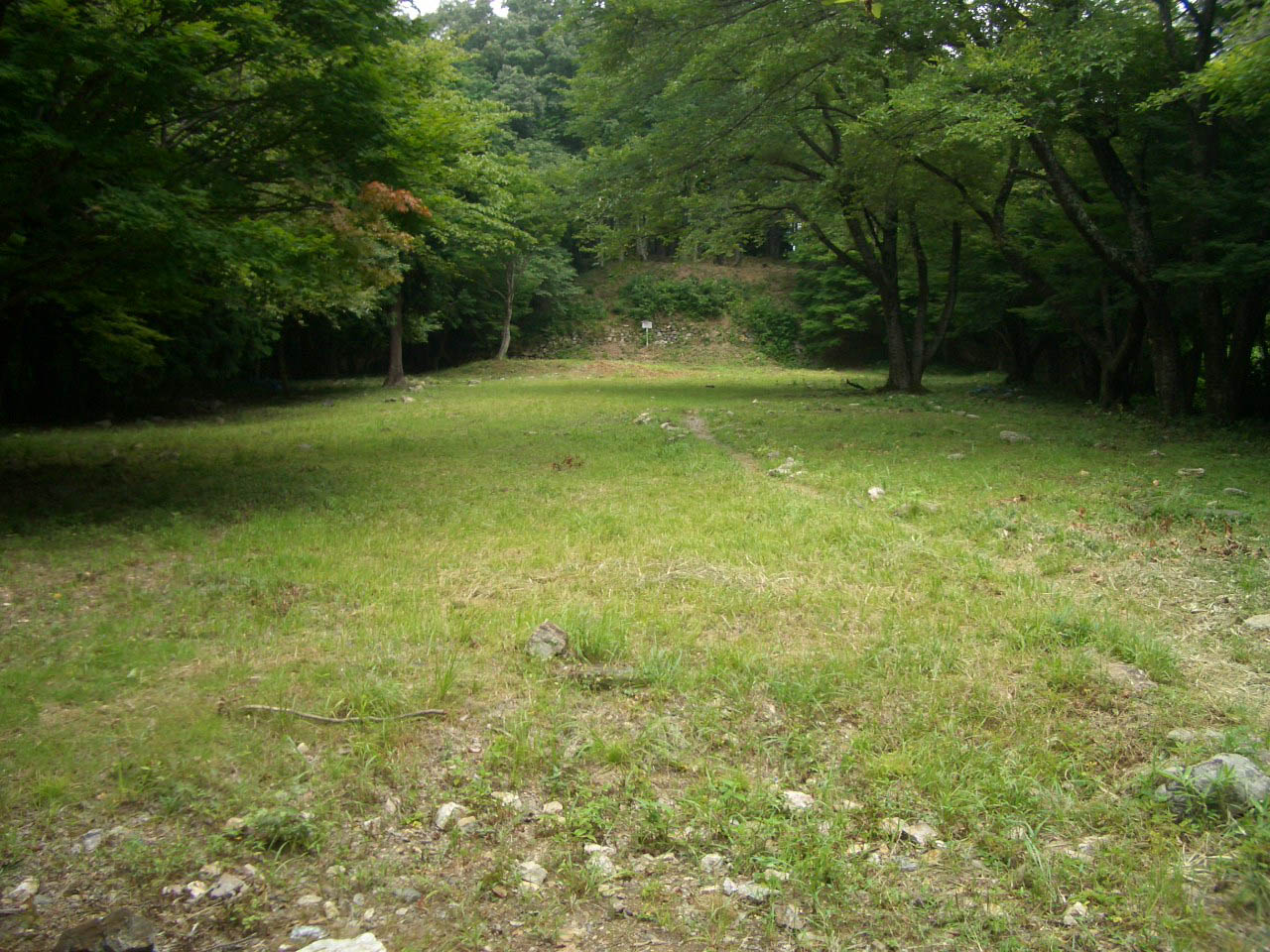
Today, the castle ruins spread across the mountainside, preserving evidence of its former grandeur through stone walls and earthwork fortifications. The physical remains demonstrate the sophisticated construction techniques used in mountain castles, with carefully engineered defensive structures adapted to the natural landscape. The romantic and melancholic reputation of the site stems partly from the historical narrative of Lady Oichi, whose story of loyalty and tragedy has been immortalized in Japanese literature and popular culture.
Visitors exploring the mountainside ruins can trace the castle's layout and imagine the daily life of its residents during peacetime and the horrors of its final siege. The combination of historical significance and scenic mountain setting makes this a meaningful destination for those interested in understanding the human costs of Japan's unification period.
Odani Castle is recognized as one of Japan's second 100 castles as designated by the Japan Castle Foundation, a distinction that highlights its historical and architectural importance among the hundreds of castle sites across the country. As a mountain castle, its design reflects the defensive priorities and construction techniques of its era, with origins dating to 1524. Visitors traveling to Shiga Prefecture can explore the site alongside other regional historical attractions.
On the Ground
| Address | Kurobecho, Nagahama, Shiga Prefecture, 526-0273, Japan |
|---|---|
| Car parking | None recorded within 1.5 km |
| Public toilets | None recorded within 1.5 km |
Car parks and toilets are counted from OpenStreetMap within 1.5 km of the castle coordinates, as recorded on 2026-08-15. They are not necessarily run by the castle, and OpenStreetMap does not record every facility — “none recorded” does not mean there are none.
Castle Hopping from Here
| Castle | Distance |
|---|---|
| Sawayama Castle 佐和山城 | 20.9 km |
| Hikone Castle 彦根城 | 21.7 km |
Distances are straight-line between castle coordinates, not travel distance. Only castles within 30 km are listed.
Is It Original?
| Original keep still standing? | No — this castle is not among the twelve in Japan whose keep survives from the pre-modern period. Any tower here is a later reconstruction or the site is a ruin. |
|---|---|
| Classification on this site | Historic Ruins |
| Nationally designated properties recorded here | 6 |
| Recorded property names (Japanese) | 小谷城跡 / 小谷城郷土館瓦蔵・籾蔵 / 小谷城郷土館主屋 |
The count of twelve surviving keeps is stated independently by the official sites of Matsue, Maruoka, Matsuyama and Bitchu Matsuyama (checked 2026-09-04). Each of the twelve carries its own source on its own page. The classification line below it is this site's own grouping, not an official designation. The designated properties below it come from the Agency for Cultural Affairs national database of designated cultural properties (国指定文化財等データベース), retrieved 2026-08-13. Official record. A missing line means no entry was found in that database — not that the property is undesignated.
Location
View larger map — © OpenStreetMap contributors
Sources and What a Blank Means
Data on this page comes from OpenStreetMap, Wikimedia Commons and the Agency for Cultural Affairs national database of designated cultural properties. Checked 2026-08-22.
A blank or missing line means we found no record in those sources — not that the castle lacks the thing. Admission fees, opening hours and access change without notice; please confirm with the official site before travelling.