Oshi Castle
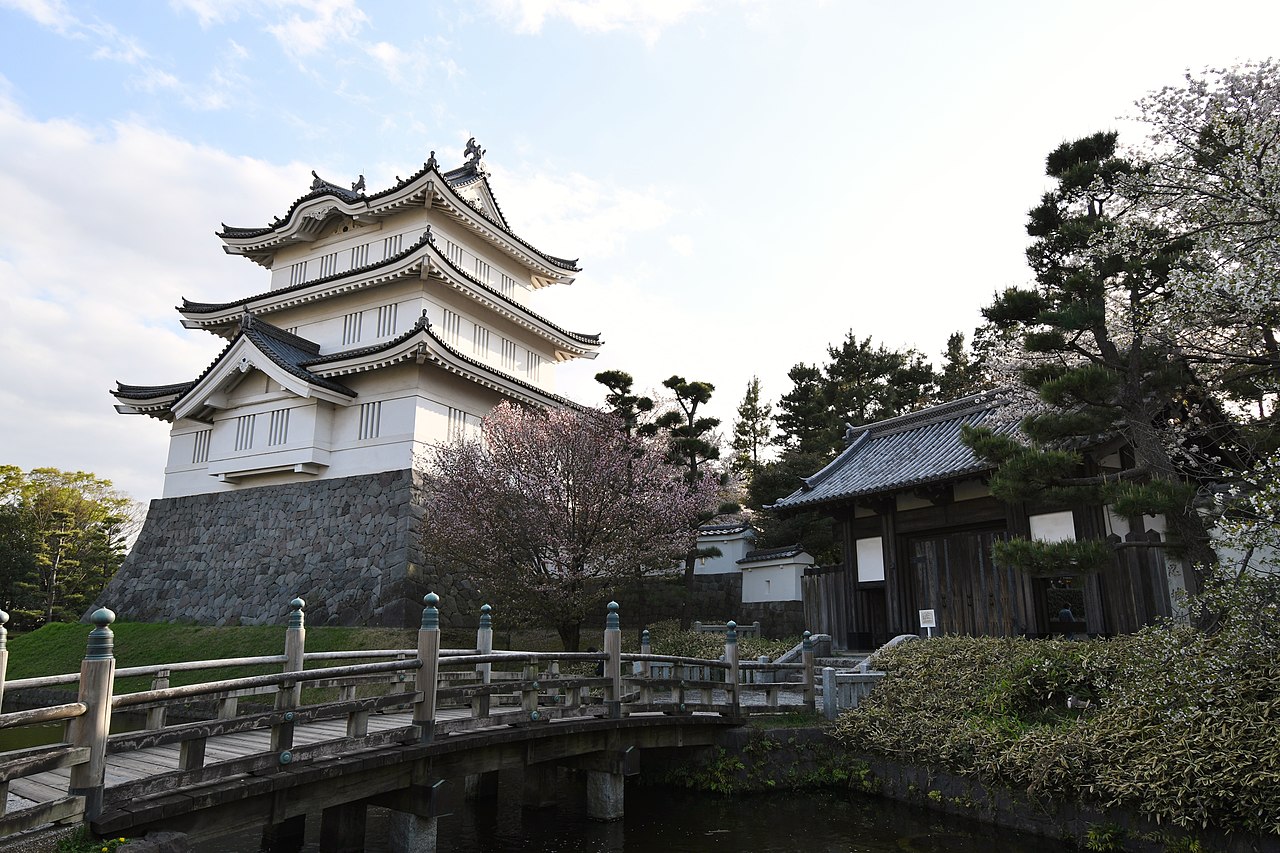
The 'floating castle' of Gyoda, Saitama, surrounded by marshes and lakes. It famously resisted Ishida Mitsunari's flooding tactics during the Odawara Campaign of 1590, inspiring the story in the film 'The Floating Castle.'
| Japanese Name | 忍城 |
|---|---|
| Prefecture | Saitama Prefecture (埼玉県) |
| Region | Kanto (関東) |
| Castle Type | Flatland Castle |
| Year Built | 15th c. |
| Designation | 100名城 |
| Coordinates | 36.1364, 139.5217 |
Oshi Castle, known throughout history as the Floating Castle, earned its nickname from its dramatic setting surrounded by marshes and wetlands in Gyoda, Saitama Prefecture. Built sometime in the 15th century, this flatland castle became famous not for its stone walls or tower height, but for its ingenious adaptation to one of Japan's most challenging geographic environments and its legendary defense during a crucial historical siege.
The castle's most celebrated moment came in 1590 during the Odawara Campaign, when forces under Ishida Mitsunari attempted to capture it through an innovative flooding strategy. Rather than deploy traditional siege tactics, Mitsunari attempted to breach the castle's defenses by deliberately flooding the surrounding area to overwhelm its walls. The defenders of the castle, however, successfully resisted these flooding tactics, demonstrating remarkable engineering and resourcefulness that made the castle a symbol of determined resistance during the final stages of Japan's unification wars.
The fortress's design demonstrates how Japanese builders adapted to local conditions, using the surrounding wetlands as a natural defensive system while maintaining the ability to supply and sustain a garrison. The elevated portions of the castle grounds provided refuge even during periods of high water, while the marshes themselves discouraged direct assault. This unique approach to castle design shows the diversity of Japanese military architecture beyond the famous stone-walled mountain fortresses of other regions.
Today's reconstructed castle allows visitors to appreciate how medieval commanders solved the challenge of building defensible strongholds in wetland environments. The castle's story has inspired modern retellings, including the film The Floating Castle, which dramatized its historical siege. As a designated Famous Castle, the site attracts those interested in both military history and the ingenious engineering solutions that characterized Japanese feudal architecture.
Oshi Castle is recognized as one of Japan's top 100 castles as designated by the Japan Castle Foundation, a distinction that highlights its historical and architectural importance among the hundreds of castle sites across the country. As a flatland castle, its design reflects the defensive priorities and construction techniques of its era, with origins dating to 15th c. Visitors traveling to Saitama Prefecture can explore the site alongside other regional historical attractions.
On the Ground
| Address | Konosu-Hanyu Line, Gyoda, Saitama Prefecture, 348-0039, Japan |
|---|---|
| Car parking | 2 car parks within 1.5 km — nearest about 309 m away |
| Public toilets | None recorded within 1.5 km |
Car parks and toilets are counted from OpenStreetMap within 1.5 km of the castle coordinates, as recorded on 2026-08-15. They are not necessarily run by the castle, and OpenStreetMap does not record every facility — “none recorded” does not mean there are none.
Castle Hopping from Here
| Castle | Distance |
|---|---|
| Sugaya Yakata 菅谷館 | 18.6 km |
| Sugiyama Castle 杉山城 | 20.8 km |
| Ashikaga Clan Residence 足利氏館 | 22.8 km |
| Kawagoe Castle 川越城 | 23.8 km |
| Kanayama Castle 金山城 | 27.2 km |
| Karasawayama Castle 唐沢山城 | 28.0 km |
Distances are straight-line between castle coordinates, not travel distance. Only castles within 30 km are listed.
Is It Original?
| Original keep still standing? | No — this castle is not among the twelve in Japan whose keep survives from the pre-modern period. Any tower here is a later reconstruction or the site is a ruin. |
|---|---|
| Classification on this site | Reconstructed Castle |
| Nationally designated properties recorded here | — (none found in the database) — please check with the castle directly |
The count of twelve surviving keeps is stated independently by the official sites of Matsue, Maruoka, Matsuyama and Bitchu Matsuyama (checked 2026-09-04). Each of the twelve carries its own source on its own page. The classification line below it is this site's own grouping, not an official designation. The designated properties below it come from the Agency for Cultural Affairs national database of designated cultural properties (国指定文化財等データベース), retrieved 2026-08-13. A missing line means no entry was found in that database — not that the property is undesignated.
Location
View larger map — © OpenStreetMap contributors
Sources and What a Blank Means
Data on this page comes from OpenStreetMap, Wikimedia Commons and the Agency for Cultural Affairs national database of designated cultural properties. Checked 2026-08-22.
A blank or missing line means we found no record in those sources — not that the castle lacks the thing. Admission fees, opening hours and access change without notice; please confirm with the official site before travelling.