Ueda Castle
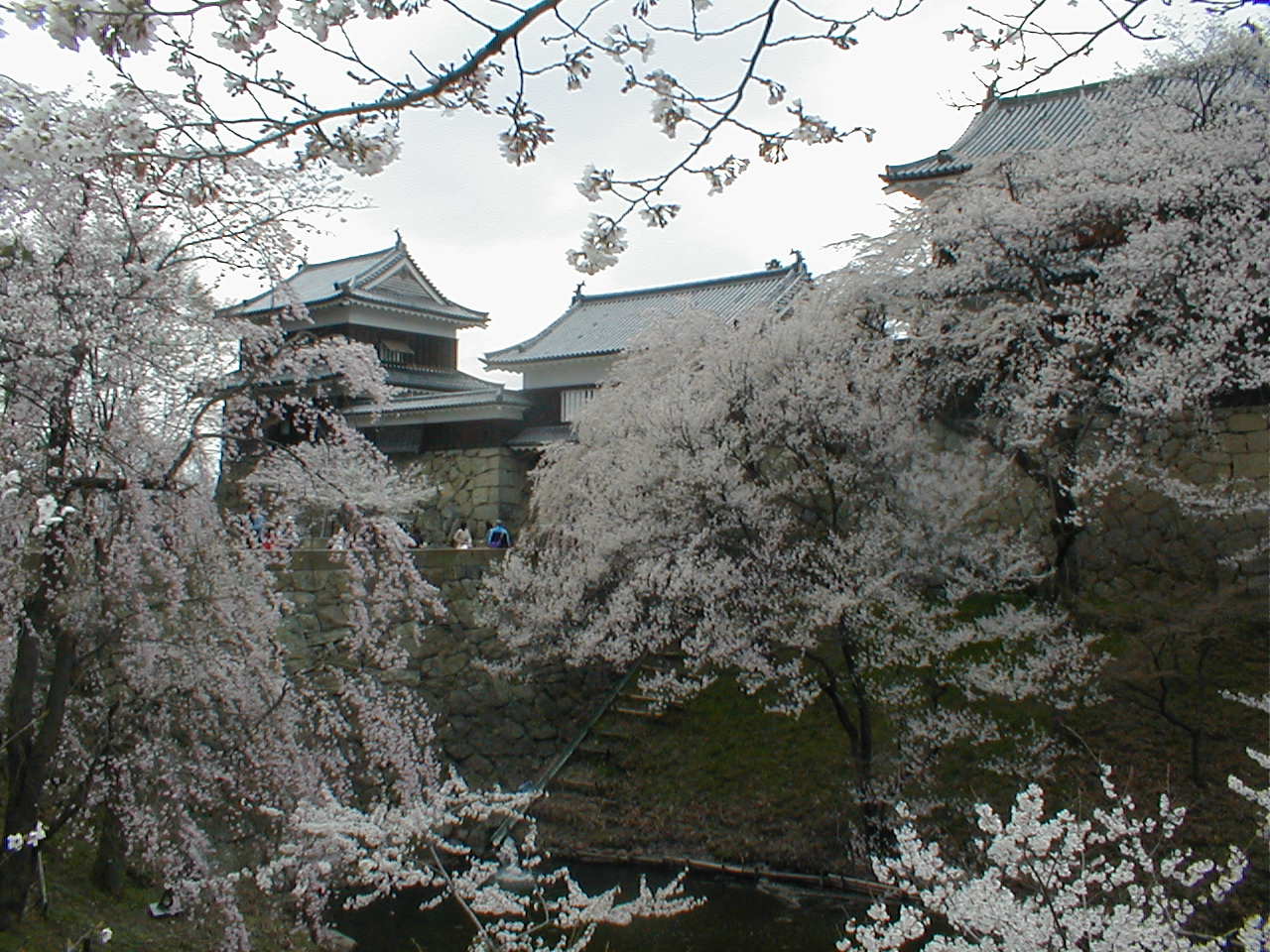
Built by the legendary strategist Sanada Masayuki in 1583. Twice it repulsed Tokugawa armies — most famously in 1600 when a 2,000-man garrison held off 38,000 troops. The three surviving turrets are designated Important Cultural Properties.
| Japanese Name | 上田城 |
|---|---|
| Prefecture | Nagano Prefecture (長野県) |
| Region | Chubu (中部) |
| Castle Type | Hill Castle |
| Year Built | 1583 |
| Designation | 100名城 |
| Coordinates | 36.4008, 138.2494 |
Ueda Castle, built in 1583 by the legendary strategist Sanada Masayuki, represents one of the most strategically important fortifications in Japanese history. This hill castle gained renown not through conquest but through defense, most notably during the Siege of 1600 when a garrison of merely 2,000 troops successfully repelled an attacking force of 38,000 soldiers commanded by the Tokugawa clan. The castle's defensive capabilities and the strategic genius of its commander made it one of the most formidable obstacles the Tokugawa forces encountered during their unification campaign.
The castle's significance extended beyond its military prowess. Sanada Masayuki's reputation as a brilliant tactician made Ueda a symbol of strategic resistance during Japan's turbulent transition to unified rule. The castle successfully defended itself twice against major Tokugawa assaults, earning respect even from its adversaries and securing a place in Japanese military history.
Three original turrets from the castle survive to the present day and have been designated as Important Cultural Properties, representing rare examples of authentic feudal-era military architecture. These structures, along with reconstructed defensive walls and gates, demonstrate the sophisticated design principles that made the castle exceptionally difficult to assault. The layered defensive systems and carefully positioned structures reveal the advanced military engineering that characterized Japan's castle-building tradition.
Today, visitors can explore the castle grounds in Nagano's Ueda region, where the remaining structures and ruins provide tangible connection to this dramatic period of Japanese history. The castle's reputation and surviving artifacts make it a significant destination for understanding feudal-era military strategy and the role of individual strongholds during Japan's path to national unification.
Ueda Castle is recognized as one of Japan's top 100 castles as designated by the Japan Castle Foundation, a distinction that highlights its historical and architectural importance among the hundreds of castle sites across the country. Its design reflects the defensive priorities and construction techniques of the feudal period, with origins dating to 1583. Visitors traveling to Nagano Prefecture can explore the site alongside other regional historical attractions.
On the Ground
| Address | national route 141, Tenjin 1-chome, Ninomaru, Ueda, Nagano Prefecture, 386-0025, Japan |
|---|---|
| Car parking | 49 car parks within 1.5 km — nearest about 128 m away |
| Public toilets | 7 public toilets within 1.5 km — nearest about 361 m away |
Car parks and toilets are counted from OpenStreetMap within 1.5 km of the castle coordinates, as recorded on 2026-08-15. They are not necessarily run by the castle, and OpenStreetMap does not record every facility — “none recorded” does not mean there are none.
Castle Hopping from Here
| Castle | Distance |
|---|---|
| Komoro Castle 小諸城 | 18.0 km |
Distances are straight-line between castle coordinates, not travel distance. Only castles within 30 km are listed.
Is It Original?
| Original keep still standing? | No — this castle is not among the twelve in Japan whose keep survives from the pre-modern period. Any tower here is a later reconstruction or the site is a ruin. |
|---|---|
| Classification on this site | Reconstructed Castle |
| Nationally designated properties recorded here | 1 |
| Recorded property names (Japanese) | 上田城跡 |
The count of twelve surviving keeps is stated independently by the official sites of Matsue, Maruoka, Matsuyama and Bitchu Matsuyama (checked 2026-09-04). Each of the twelve carries its own source on its own page. The classification line below it is this site's own grouping, not an official designation. The designated properties below it come from the Agency for Cultural Affairs national database of designated cultural properties (国指定文化財等データベース), retrieved 2026-08-13. Official record. A missing line means no entry was found in that database — not that the property is undesignated.
Getting There
| Nearest station | Ueda Station (上田駅) — 0.5 km in a straight line |
|---|---|
| Daily passengers at that station (2019) | 10,337 |
Station distances are straight-line, measured from the castle coordinates. Passenger counts: National Land Numerical Information (MLIT), FY2019.
Location
View larger map — © OpenStreetMap contributors
Sources and What a Blank Means
Data on this page comes from OpenStreetMap, Wikimedia Commons, the Agency for Cultural Affairs national database of designated cultural properties and the National Land Numerical Information service (MLIT). Checked 2026-08-22.
A blank or missing line means we found no record in those sources — not that the castle lacks the thing. Admission fees, opening hours and access change without notice; please confirm with the official site before travelling.