Wakasa Onigashiro
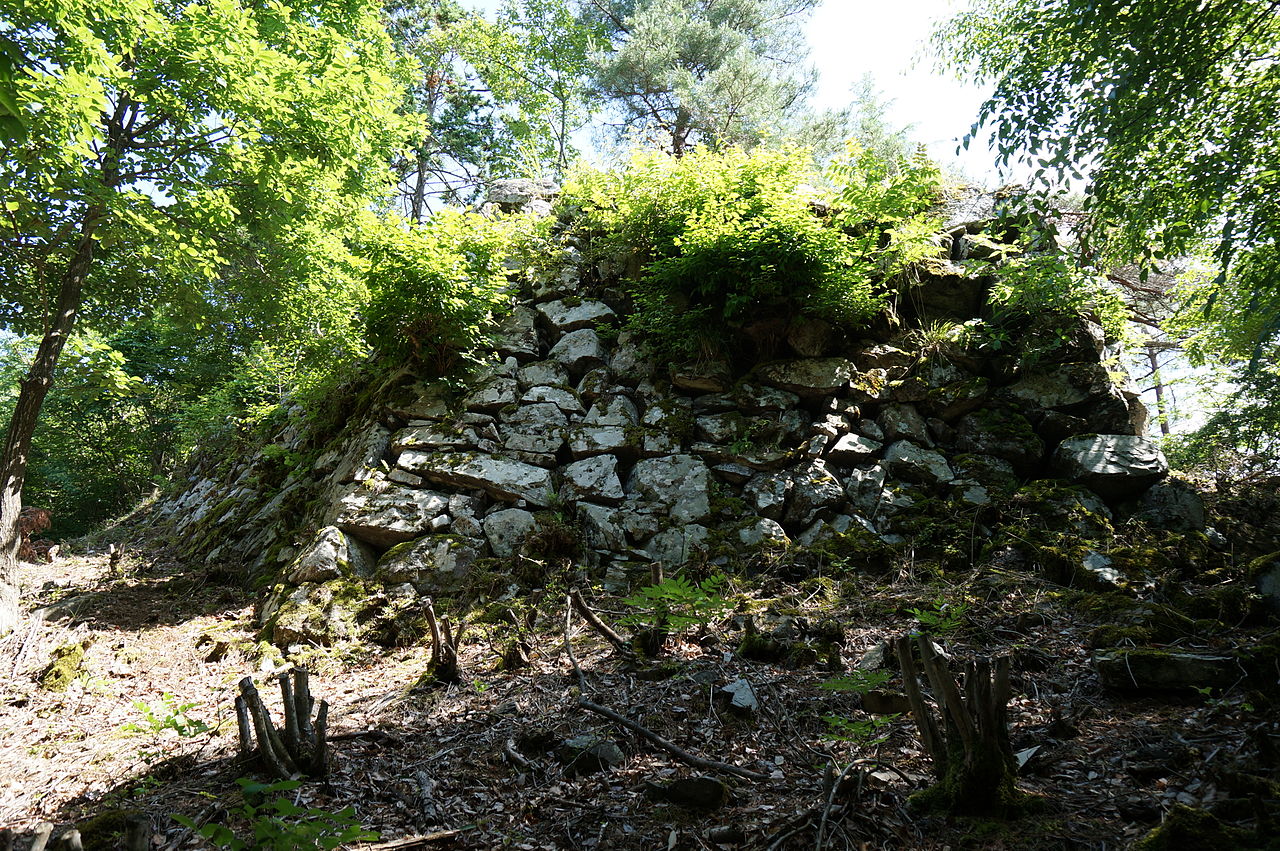
A mountain castle atop a 692m peak in Wakasa, Tottori, with dramatic stone walls tumbling down clifftops. One of the highest stone-walled castles in Japan, it was held by the Yamana clan before being absorbed into Toyotomi territory.
| Japanese Name | 若桜鬼ヶ城 |
|---|---|
| Prefecture | Tottori Prefecture (鳥取県) |
| Region | Chugoku (中国) |
| Castle Type | Mountain Castle |
| Year Built | 15th c. |
| Designation | 続100名城 |
| Coordinates | 35.3667, 134.3833 |
Wakasa Onigashiro represents an exceptional example of Japanese mountain castle construction, perched atop a 692-meter peak in Wakasa, Tottori Prefecture. This fortress stands among Japan's highest stone-walled castles, earning recognition within the extended list of the nation's historically significant strongholds.
Construction of this mountain stronghold dates to the fifteenth century, when the Yamana clan controlled vast territories across western Japan. The castle later came under Toyotomi domain as regional power consolidated during the late sixteenth century, though its remote mountain location allowed it to maintain distinct regional character.
The castle's defining feature is its dramatic stone walls cascading down steep cliffsides, creating a formidable defensive structure that maximized the natural terrain. The vertical drops and precipitous positioning would have presented considerable obstacles to any attacking force, while the elevated position provided comprehensive surveillance of surrounding territories. The scale of stonework required to construct such extensive fortifications at this elevation demonstrates both the resources available to the Yamana clan and the engineering expertise of their builders.
Reaching the castle requires a substantial hiking effort, as the site remains relatively remote and undeveloped. The challenging ascent rewards visitors with expansive views across the surrounding landscape and tangible evidence of fifteenth-century military strategy. For experienced hikers and serious castle enthusiasts, the journey to examine these remarkable stone structures provides insight into mountain fortress construction methods and the geographic challenges medieval commanders had to address.
Wakasa Onigashiro is recognized as one of Japan's second 100 castles as designated by the Japan Castle Foundation, a distinction that highlights its historical and architectural importance among the hundreds of castle sites across the country. As a mountain castle, its design reflects the defensive priorities and construction techniques of its era, with origins dating to 15th c. Visitors traveling to Tottori Prefecture can explore the site alongside other regional historical attractions.
On the Ground
| Address | Yoro, Yazu, Yazu County, Tottori Prefecture, 680-0601, Japan |
|---|---|
| Car parking | None recorded within 1.5 km |
| Public toilets | None recorded within 1.5 km |
Car parks and toilets are counted from OpenStreetMap within 1.5 km of the castle coordinates, as recorded on 2026-08-15. They are not necessarily run by the castle, and OpenStreetMap does not record every facility — “none recorded” does not mean there are none.
Castle Hopping from Here
| Castle | Distance |
|---|---|
| Tottori Castle 鳥取城 | 20.1 km |
Distances are straight-line between castle coordinates, not travel distance. Only castles within 30 km are listed.
Is It Original?
| Original keep still standing? | No — this castle is not among the twelve in Japan whose keep survives from the pre-modern period. Any tower here is a later reconstruction or the site is a ruin. |
|---|---|
| Classification on this site | Historic Ruins |
| Nationally designated properties recorded here | 1 |
| Recorded property names (Japanese) | 若桜鬼ヶ城跡 |
The count of twelve surviving keeps is stated independently by the official sites of Matsue, Maruoka, Matsuyama and Bitchu Matsuyama (checked 2026-09-04). Each of the twelve carries its own source on its own page. The classification line below it is this site's own grouping, not an official designation. The designated properties below it come from the Agency for Cultural Affairs national database of designated cultural properties (国指定文化財等データベース), retrieved 2026-08-13. Official record. A missing line means no entry was found in that database — not that the property is undesignated.
Getting There
| Nearest station | Tampi Station (丹比駅) — 2.5 km in a straight line |
|---|---|
| Largest station nearby | Wakasa Station — 2.8 km in a straight line |
| Daily passengers at that station (2019) | 235 |
Station distances are straight-line, measured from the castle coordinates. Passenger counts: National Land Numerical Information (MLIT), FY2019.
Location
View larger map — © OpenStreetMap contributors
Sources and What a Blank Means
Data on this page comes from OpenStreetMap, Wikimedia Commons, the Agency for Cultural Affairs national database of designated cultural properties and the National Land Numerical Information service (MLIT). Checked 2026-08-22.
A blank or missing line means we found no record in those sources — not that the castle lacks the thing. Admission fees, opening hours and access change without notice; please confirm with the official site before travelling.